
Two perspectives. One vision.
Securing Europe’s digital sovereignty
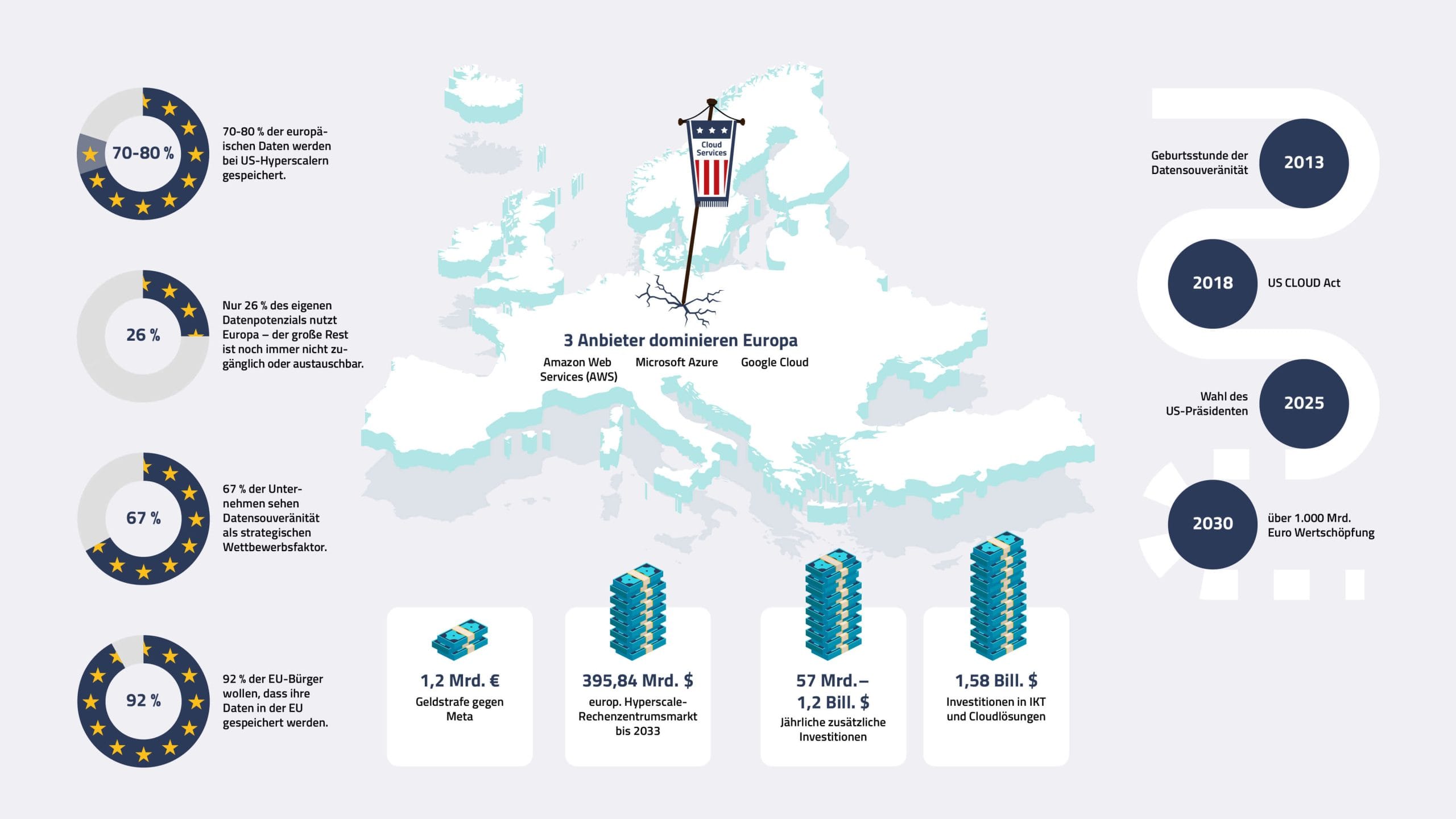
How can a trustworthy, federated data ecosystem be built? What sets Gaia-X apart from global platform models – and what role do European partners like PFALZKOM play in this process?
In their respective interviews, Ulrich Ahle (CEO, Gaia-X AISBL) and Robert Duisberg (Senior Manager, Insentis) share their perspectives on the opportunities, challenges, and potential of Gaia-X – balancing political strategy, practical implementation, and European responsibility. Two voices. Two perspectives. One united vision.
PFALZKOM as a Gaia-X Clearing House
Trust requires technical excellence.
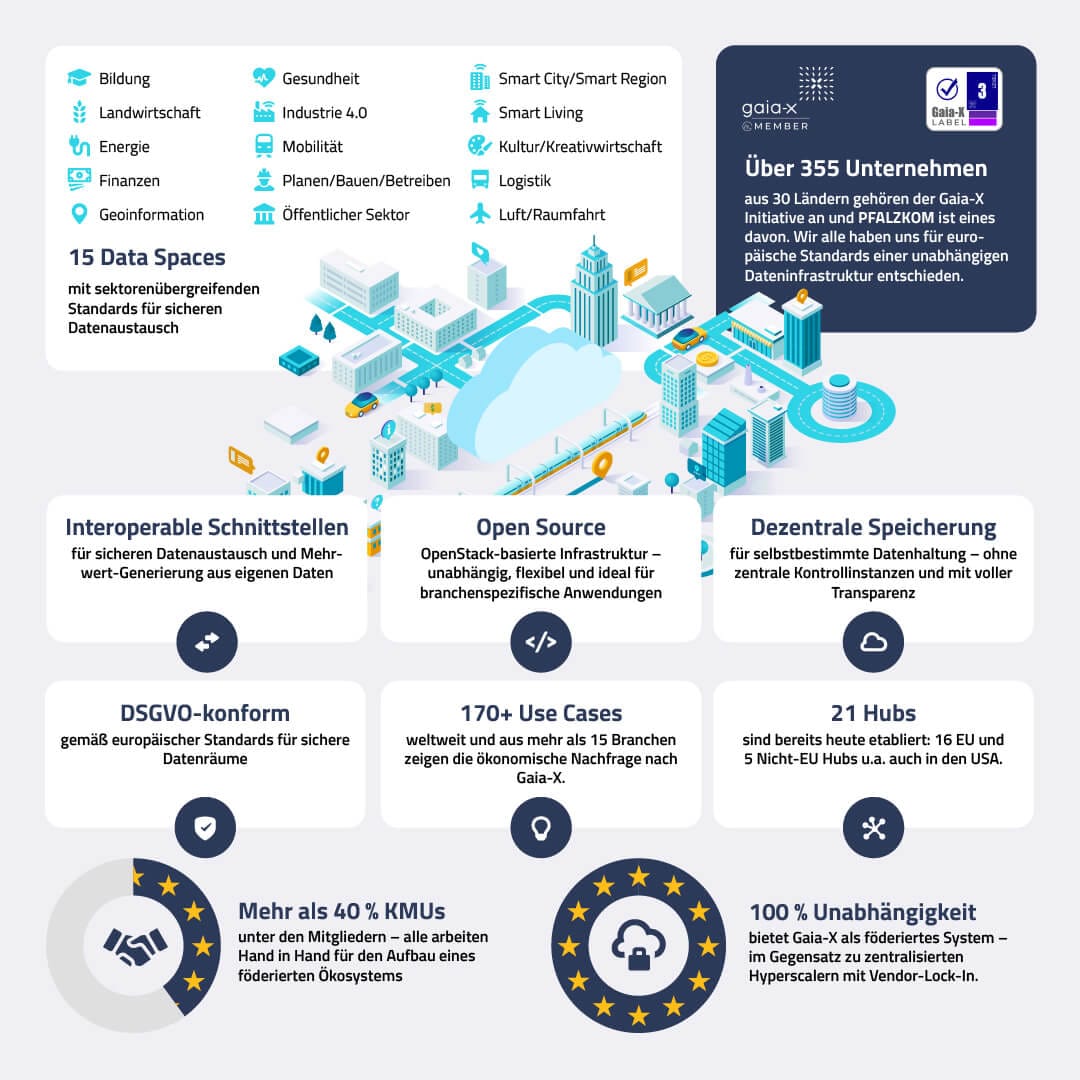
As an accredited Gaia-X Digital Clearing House (GXDCH), we verify participants, services, and infrastructures. We secure data rooms in accordance with Gaia-X rules, thereby guaranteeing you:
As part of the PFALZWERKE Group, we combine technological expertise with regional proximity and a stable infrastructure – to deliver a sovereign cloud solution.
The secure home for your data
Right next to you. With high-performance connectivity.
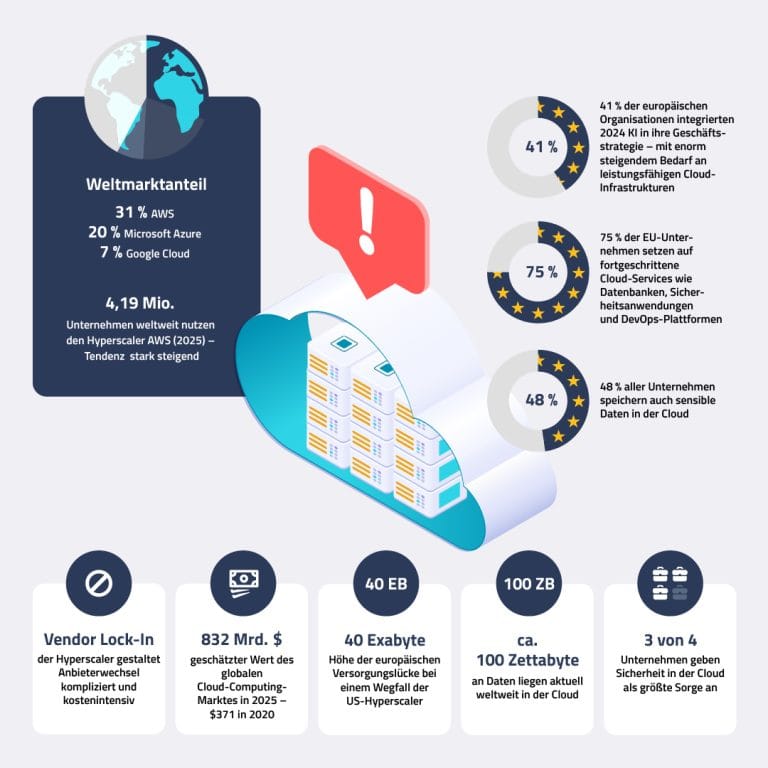
With the Regional Edge Cloud, we combine local proximity with European independence. Based on OpenStack technology, our infrastructure is operated entirely within our own data centers in the metropolitan region – directly connected to our high-performance fiber-optic network. What this means for you: secure data storage in European hands, reliable real-time availability, and flexible scalability – even for latency-sensitive applications, mobile services, and connected data spaces.
Our Regional Edge Cloud gives you full control – without dependency on hyperscalers and with all the benefits of a professional IT infrastructure. As a Gaia-X Digital Clearing House, we are shaping an infrastructure that combines technological excellence with European values – together with strong partners from the pan-European Gaia-X ecosystem, the open source community, and regional innovation clusters. For our shared digital future – secure and sovereign.
Your personal contacts
Thomas Bach
Business Development
thomas.bach@pfalzkom.de
Carsten Brüggemann
Principal Consultant
carsten.brueggemann@pfalzkom.de
Eric Gabel
Marketing and Communication
eric.gabel@pfalzkom.de
Verification and trust in the data ecosystem
PFALZKOM is an accredited Gaia-X Digital Clearing House (GXDHC) and thus part of a Europe-wide network of decentralized trust nodes. We ensure that only authorized organizations, people and machines have access to Gaia-X data rooms.
In concrete terms, this means

Together, digitally sovereign
Digital sovereignty is not achieved alone – it grows within a strong network. As a Gaia-X Digital Clearing House, PFALZKOM is part of a pan-European initiative aimed at greater independence, trust, and transparency in data handling. Together with our partners from the Gaia-X ecosystem, the open source community, and regional innovation clusters, we are shaping an infrastructure that combines technological excellence with European values.
For a united digital future – secure and sovereign.
Understanding Digital Sovereignty
Connecting Data Securely and Transparently — in Europe
Gaia-X lays the foundation for secure data rooms and sovereign cloud infrastructures. Here, you can learn about the opportunities this European initiative offers businesses and Data Centers.